Program Overview
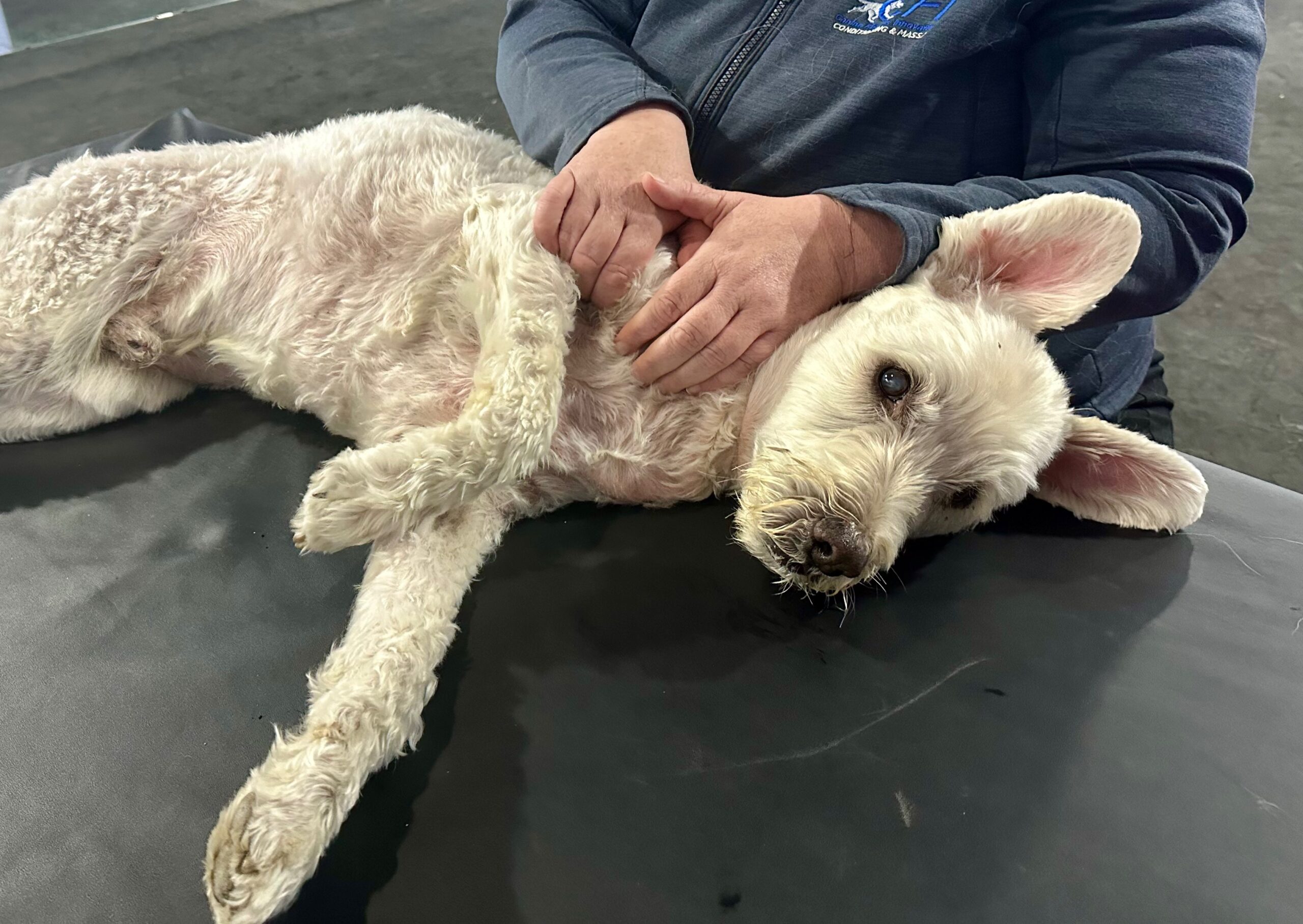
The NC State Canine Massage program provides the most up-to-date information and techniques to equip participants with the knowledge and skills to safely and effectively assess and massage dogs. The program is delivered in a hybrid format of online lecture and hands-on lab session.
Through preparatory online course work, students will build a strong foundation in functional anatomy, joint and muscle structure, and assessment methods including structure and gait assessment and range of motion as a tool to evaluate and assess progress. The online course material includes interactive workbooks to further enhance the learning process.
Massage theory and techniques are introduced in detail, covering the benefits, contraindications, and application of methods such as effleurage, petrissage, tapotement, friction, and compression. Special considerations for working with puppies and senior dogs are addressed, alongside essential safety topics such as canine body language, positioning for both dog and practitioner, and professional boundaries and ethics.
The program culminates in a two-day hands-on lab, where participants work directly with a variety of dogs. This practical experience focuses on palpation skills, identifying muscle tension, adhesions, and irregularities, and using visual and range of motion assessments to target areas of concern. By the end of the course, participants will have the knowledge, skills and confidence to incorporate safe and effective canine massage techniques into their assessment and treatment “toolbox”.

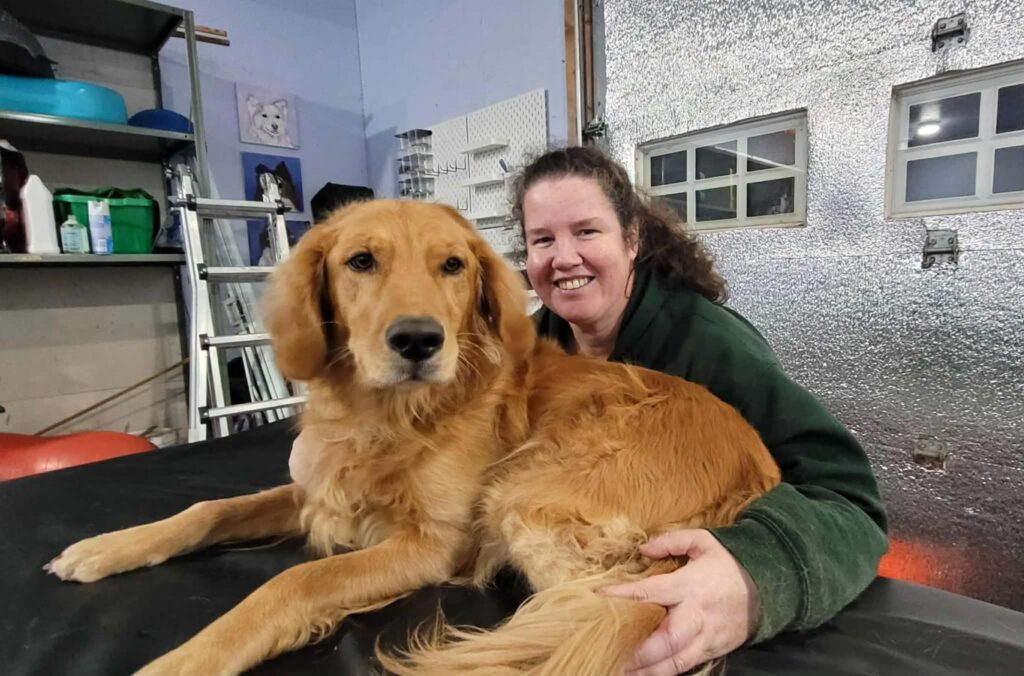
Tara Monahan is an education and canine health professional with over two decades of experience in teaching and program design. Throughout her career, she has demonstrated a consistent ability to create engaging, inclusive, and effective learning environments that accommodate diverse learners. Her approach to education emphasizes collaboration, innovation, and accessibility, ensuring that students and clients alike are challenged, supported, and inspired.
Link to full bio
Curriculum
Canine Massage I (ONLINE COURSE) – $699.00
Canine Massage II (HANDS-ON LAB) – $1199.00
Canine Massage III (CASE STUDIES + ONLINE EXAM) – $399.00
Canine Massage Bundle (ONLINE + HANDS-ON LAB) – $2297.00
LAB DATES:
October 17-18, 2026 (Lab Full)
May 22-24, 2027
Prerequisites and Intended Audience:
This program is open to: Veterinary and Animal Health Assistants, Veterinary Technicians/Nurses, Veterinarians, Animal Physiotherapists, and related animal health professions. For more information or questions about eligibility, contact: info@neseminars.com

NOTE
Participants may take Canine Massage I (Online Course) only as professional development. To receive the full NC State Certificate, the participant must complete both the Canine Massage I (ONLINE) course and Canine Massage II (HANDS-ON LAB) course
Canine Massage I (ONLINE) Course Outline
- Introduction
- Terminology
- Canine Anatomy & Physiology
- Skeletal system
- Appendicular Skeleton
- Front Assembly
- Rear Assembly
- Axial Skeleton
- Muscular system
- Proximal Muscles of the Forelimb
- Forelimb Muscle Groups
- Muscles Attaching the Forelimb to the Body
- Muscles of the Hindlimb
- Muscle Groups of the Hindlimb
- Stabilizing and Locomotive Muscles
- Skeletal system
- Assessment
- Structure
- Intro to Structure
- The Front Assembly
- The Rear Assembly
- The Backline
- Putting It All Together
- Gait and Movement
- Intro to Gait
- Red Flags
- Range of Motion
- Structure
- Massage Theory & Techniques
- Benefits, Indications, and Contraindications
- Massage Movements
- Developing a Massage Routine
- Massaging Puppies
- Senior Massage
- Safety
- Canine Body Language
- Safety, Boundaries, and Ethics
Canine Massage I I (HANDS-ON LAB) Course Outline
Day 1
- Brief review of skeletal and muscular systems
- Contraindications and safety
- Testing range of motion
- Developing a ROM testing routine
- Recording and tracking findings
- Massage Strokes
- Sequencing a full body massage
Day 2
- Review of ROM
- Review of the full body massage sequence
- Palpation basics
- Recognizing and addressing restricted range of motion
- Identifying compensatory patterns.
- Q&A, and Course Wrap-Up


Learning Objectives
Upon completion of the course, the veterinary professional should be able to:
- Learn the principles of canine massage theory and techniques
- Develop the necessary foundation in functional anatomy, joint and muscle structure
- Understand both the benefits and contraindications of canine massage
- Learn assessment methods including structure, gait assessment and range of motion as tools to evaluate and assess progress
- Effectively demonstrate application of methods such as effleurage, petrissage, tapotement, friction, and compression
- Understand the differences in various life stages as it relates to canine massage treatment techniques
- Use of palpation skills, identifying muscle tension, adhesions, and irregularities will be covered in detail during the hands-on lab session
- Understand safety as it relates to canine body language, positioning for both dog and practitioner
- Learn the importance of professional boundaries and ethics.
- Confidently incorporate safe and effective canine massage techniques into assessment and treatment