

8.5 hour online course
$499.00
Description
The Neurology in Veterinary Rehabilitation course helps professionals enhance and reinforce concepts and therapeutic considerations for neurological patients in the rehabilitation setting. The topics covered provide an overview of veterinary neurology tailored to the rehabilitation practitioner, including relevant neuroanatomy and neurophysiology, neurologic examination, neurolocalization, differential diagnoses, and neurodiagnostics. The course explores the important relationship between the veterinary neurologist, general practitioner, and rehabilitation team to optimize patient care.
Discussion of various myelopathies and encephalopathies including pathophysiology, diagnosis, therapeutic management, prognosis, and rehabilitation considerations will aid the rehabilitation team in formulating the appropriate plan for each patient to enhance the recovery and life of the patient. Nursing care is of utmost importance for the neurologic patient, and review of care will demonstrate the essential role of the rehabilitation team. Outcome measures for neurologic patients and realistic goal-setting will be shown to help the rehabilitation team adjust the plan for each patient throughout their journey.
Outline for Neurology in Veterinary Rehabilitation
- Introduction to Veterinary Neurology (10 minutes)
- Learning objectives
- Acknowledge the basis and history of veterinary neurology
- Appreciate the roles and relationships between the general practitioner, rehabilitation therapist, and veterinary neurologist in the care of the neurologic patient
- Outline
- Overview of veterinary neurology including brief history of the specialty, duties and responsibilities of the veterinary neurologist, relationship between the general practitioner, rehabilitation therapist, and veterinary neurologist, and goals of therapy for neurologic patients
- Learning objectives
- Benefits of Rehabilitation in Neurologic Patients (23 minutes)
- Learning objectives
- Understand the basis for rehabilitation for the neurologic patient
- Acknowledge the benefits and precautions of various modalities, manual therapy, exercise, and ergonomic assistance used in rehabilitation for neurologic patients
- Outline
- Basis of rehabilitation for neurologic patients
- Precautions for neurologic cases
- Modalities, manual therapy, exercise, and ergonomic assistance used for neurologic patients
- Learning objectives
- Basics of Neuroanatomy, Neurophysiology, and Injury to the Nervous System (30 minutes)
- Learning objectives
- Develop an understanding of the relevant neuroanatomy and neurophysiology concepts discussed
- Understand the types of injuries (primary and secondary) to the nervous system and how they pertain to treatment in the rehabilitation setting
- Outline
- Review of basic neuroanatomy and neurophysiology
- Pathophysiology of injury to the nervous system
- Learning objectives
- Neurologic Examination (42 minutes)
- Learning objectives
- Understand the importance of the neurologic examination
- Review the components of the neurologic examination
- Perform a concise yet thorough neurologic examination in the rehabilitation setting
- Outline
- Importance of the neurologic examination
- Review of the neurologic examination
- Tips and tricks for facilitating the neurologic examination in the rehabilitation setting
- Learning objectives
- Neurolocalization and Differential Diagnoses (48 minutes)
- Learning objectives
- Review basic neurolocalization using case examples
- Formulate an appropriate differential diagnosis list for various neurologic presentations
- Outline
- Neurolocalization review
- Differential diagnoses for neurologic conditions (DAMNITV)
- Case examples of neurolocalization and differential diagnoses
- Learning objectives
- Neurodiagnostics (28 minutes)
- Learning objectives
- Understand the importance of neurodiagnostics in appropriate treating neurologic patients in the medical and rehabilitation settings
- Provide basic knowledge on various neurodiagnostics, including blood work, radiographs, magnetic resonance imaging (MRI), computed tomography (CT), and electrodiagnostics.
- Outline
- Indications for neurodiagnostics
- Review of neurodiagnostics
- Minimum database (Complete cell count, biochemical profile, urinalysis)
- Radiographs
- Spinal radiographs
- Thoracic radiographs
- Other serologic tests
- 2M antibody test, acetylcholine receptor antibody test, infectious serologic titers, other metabolic tests (LDDST, cortisol, insulin: glucose ratio)
- Magnetic resonance imaging (MRI)
- Computed tomography (CT)
- Electrodiagnostics (EMG, EEG) and muscle/nerve biopsies
- Importance of neurodiagnostics in the rehabilitation setting
- Learning objectives
- Referral Versus Outpatient Management of Neurologic Conditions (15 minutes)
- Learning objectives
- Provide a basic understanding of the referral and outpatient therapies available for neurologic patients
- Understand the indications of emergent referral of neurologic cases
- Outline
- Review of referral and outpatient therapies for neurologic patients
- Indications for emergent referral
- Learning objectives
- Pathophysiology, Diagnosis, and General Therapeutic Considerations: Intervertebral Disk Disease (IVDD) (54 minutes)
- Learning objectives
- Understand the basic pathophysiology, diagnosis, and treatment options for IVDD
- Appropriately establish a thorough rehabilitation plan for patients with IVDD
- Review the prognosis and outcome measures for patients with IVDD
- Outline
- Review of pathophysiology of IVDD
- Diagnosis of IVDD
- Medical management of IVDD
- Surgical intervention for IVDD
- Rehabilitation
- Biophysical agents and modalities
- Manual therapy
- Therapeutic exercise, including aquatic therapy
- Ergonomics
- Prognosis and outcome measures
- Learning objectives
- Pathophysiology, Diagnosis, and General Therapeutic Considerations: Various Myelopathies and Neuromuscular Conditions (60 minutes)
- Learning objectives
- Understand the basic pathophysiology, diagnosis, and treatment options for various myelopathies and neuromuscular conditions discussed
- Appropriately establish a thorough rehabilitation plan for the discussed conditions
- Review the prognosis and outcome measures for these patients
- Outline
- Discussion of pathophysiology, diagnosis, therapeutic management, prognosis, and rehabilitation considerations for following conditions
- Myelopathies
- Degenerative myelopathy
- Lumbosacral disease
- Spinal trauma
- Other myelopathies (vertebral malformation, cervical spondylomyelopathy, subarachnoid diverticulum, cystic conditions)
- Neuromuscular disease
- Brachial plexus/lumbar intumescence conditions (injury, neoplasia)
- Myasthenia gravis
- Coonhound paralysis/polyradiculoneuritis
- Myelopathies
- Discussion of pathophysiology, diagnosis, therapeutic management, prognosis, and rehabilitation considerations for following conditions
- Learning objectives
- Pathophysiology, Diagnosis, and General Therapeutic Considerations: Encephalopathies/Vestibular Dysfunction (22 minutes)
- Learning objectives
- Understand the basic pathophysiology, diagnosis, and treatment options for various encephalopathies and vestibular dysfunction discussed
- Appropriately establish a thorough rehabilitation plan for the discussed conditions
- Review the prognosis and outcome measures for these patients
- Outline
- Discussion of pathophysiology, diagnosis, therapeutic management, prognosis, and rehabilitation considerations for following conditions
- Encephalopathies (neoplasia, vascular events, inflammation/infection, congenital conditions)
- Vestibular dysfunction (idiopathic, otitis media/interna, neoplasia, vascular)
- Discussion of pathophysiology, diagnosis, therapeutic management, prognosis, and rehabilitation considerations for following conditions
- Learning objectives
- Nursing Care of the Neurologic Patient (31 minutes)
- Learning objectives
- Appreciate and understand the importance of nursing care for the neurologic patient
- Identification, management, and prevention strategies for consequences of neurologic conditions on the other body systems
- Understand micturition disorders in the neurologic patient and appropriately perform urinary bladder expression
- Distinguish between the assistive devices available and when to implement these devices in the neurologic patient
- Outline
- Importance of nursing care for the neurologic patient
- Consequences of neurologic conditions on other body systems
- Identification of consequences
- Prevention and management of consequences
- In-patient vs. outpatient nursing care
- Review of nursing care
- Urinary bladder expression
- Environmental needs of the neurologic patient
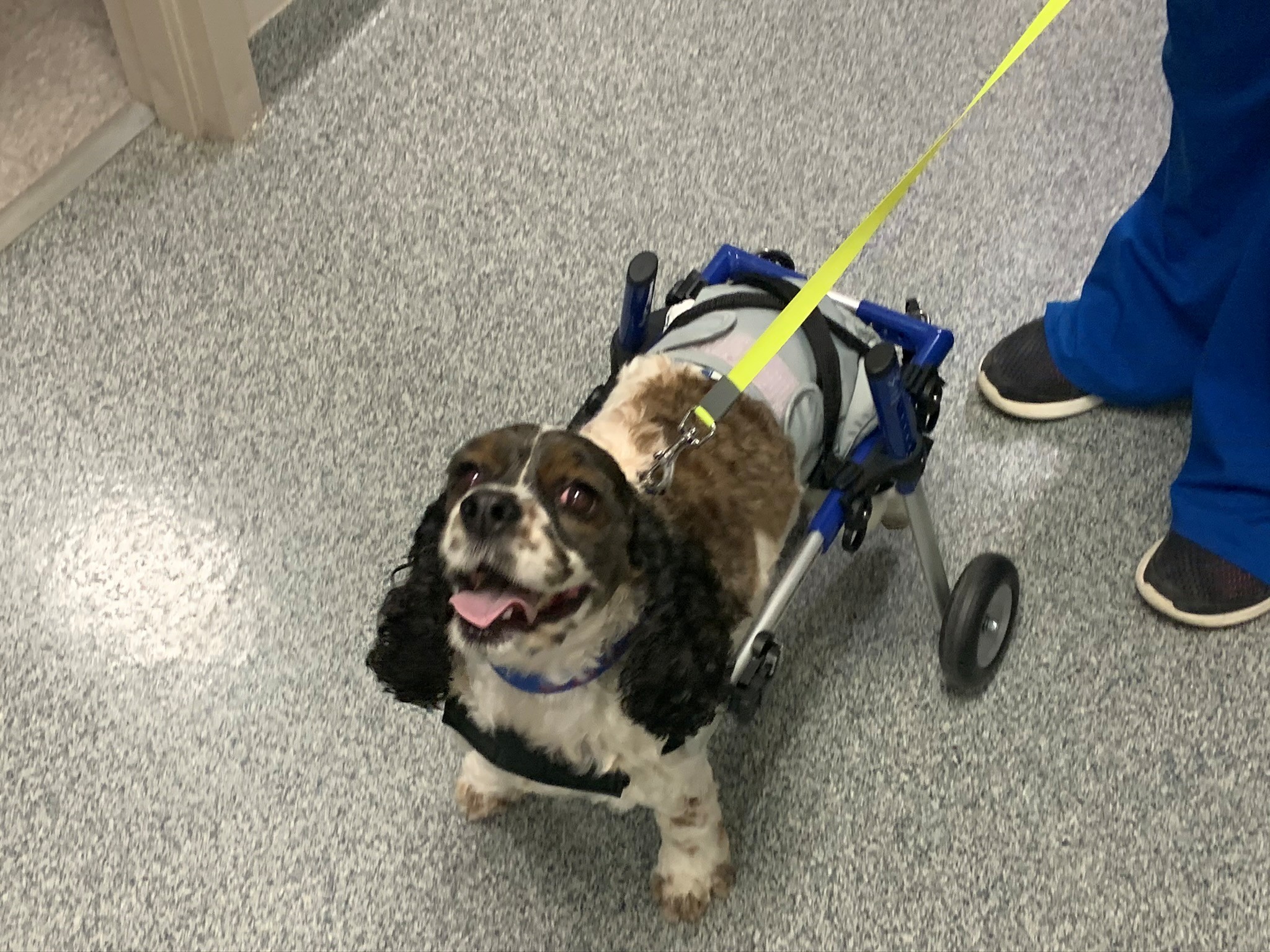
- Assistive devices (harness, hoists, carts, drag bags, booties, braces)
- Education of the client for nursing care by the rehabilitation team
- Reevaluation of the neurologic patient in the rehabilitation setting
- Learning objectives
- Outcome Measures for the Neurologic Patient (22 minutes)
- Learning objectives
- Review the prognoses of various neurologic conditions
- Understand the outcome measures used to help formulate an appropriate therapy plan for the neurologic patient
- Outline
- Review of prognoses of various neurologic conditions
- Determination of outcome measures
- Client questionnaires
- Gait observation and analysis/serial neurologic examinations
- Pain scales
- Body condition scales
- Limb circumference/muscle mass
- Quality of life measurements
- Learning objectives
- Case Examples: Neurological Patients in the Rehabilitation Setting (planned 60-90 minutes)
- Learning objectives
- Review cases of neurological patients, including history, neurological examination, neurolocalization, neurodiagnostics, treatment options, and rehabilitation plans
- Understand the rationale for development of an appropriate rehabilitation therapy plan and determination of outcome measures for neurological patients with various neurological conditions
- Outline
- Review steps and objectives of case examples
- Case examples
- IVDD (Hansen’s Type I)
- Fibrocartilagenous embolism
- Lumbosacral disease
- Degenerative myelopathy
- CSM/Wobbler syndrome
- Trauma (brain/cervical)
- Vestibular (feline ischemic encephalopathy)
- Chiari-like malformation/COMS/SM
- Metabolic: Diabetic neuropathy
- Learning objectives
Learn more about NC State University Neurology in Veterinary Rehabilitation course faculty
Course Details
| Course Length | |
|---|---|
| Platform | |
| Instructor(s) |
Prerequisites
This program is open to:
- Veterinarians
- Veterinary Technicians
- Physical Therapists
- Physical Therapist Assistants
- Occupational Therapists
- Actively enrolled student in one of these fields
Additional Info
- Certificates of Attendance can be printed once testing is completed with a passing grade. You can then print your certificate from home.
- Northeast Seminars is recognized by the RACE to offer continuing education for Veterinarians and Veterinary Technicians.
Portions Copyright© Northeast Seminars Inc. All rights reserved.
You must be logged in to post a review.
Reviews
There are no reviews yet.